
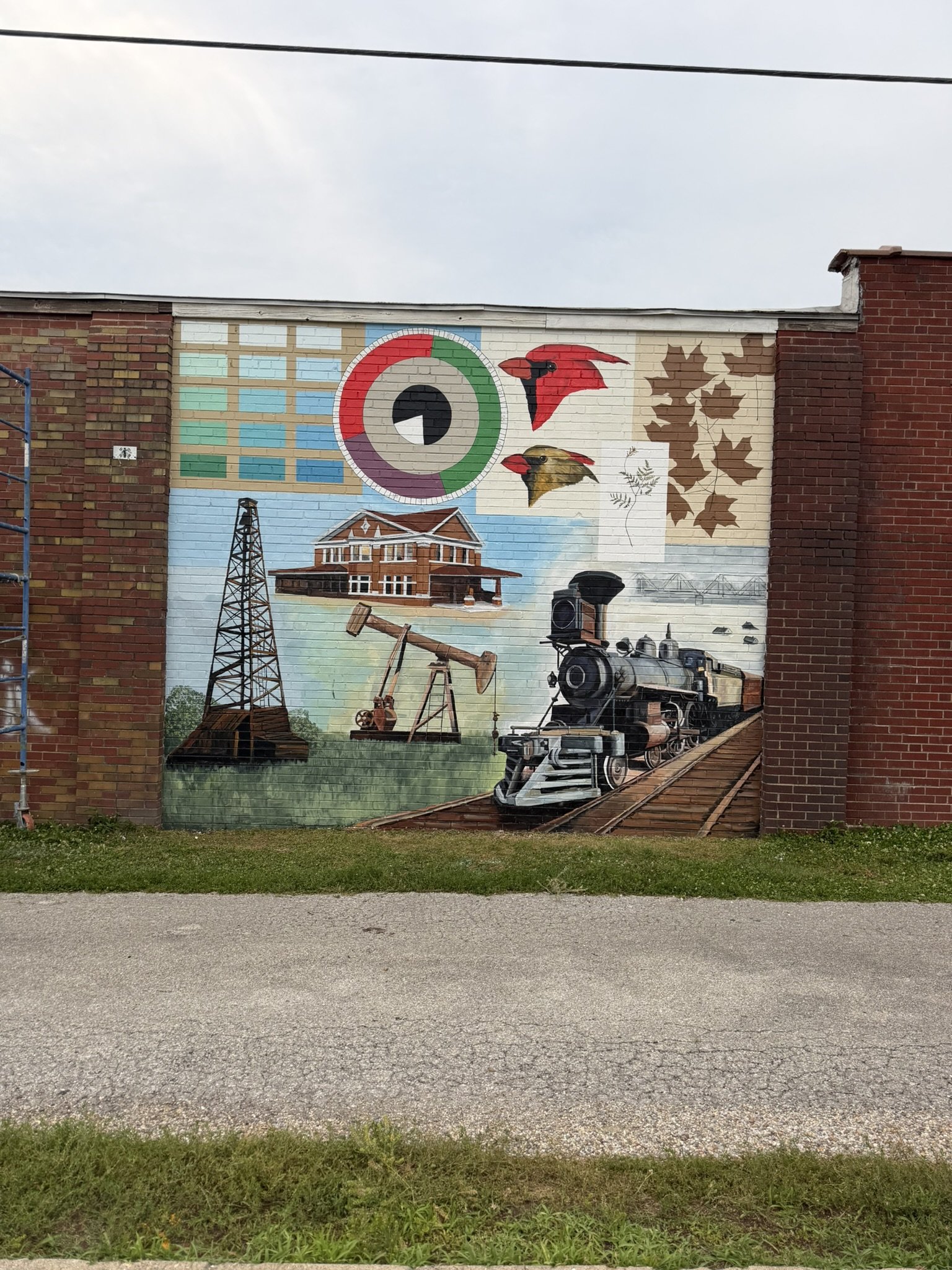
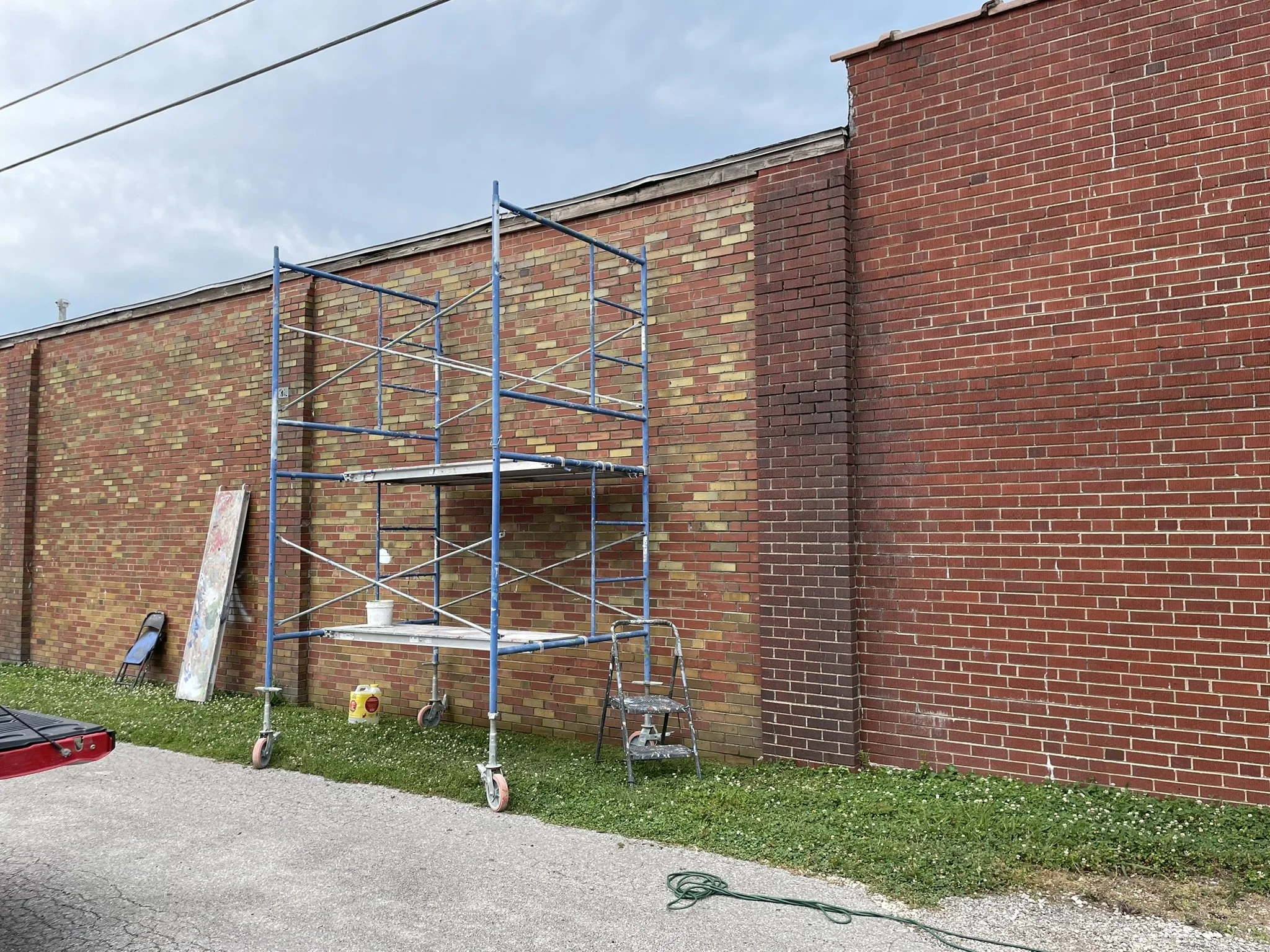
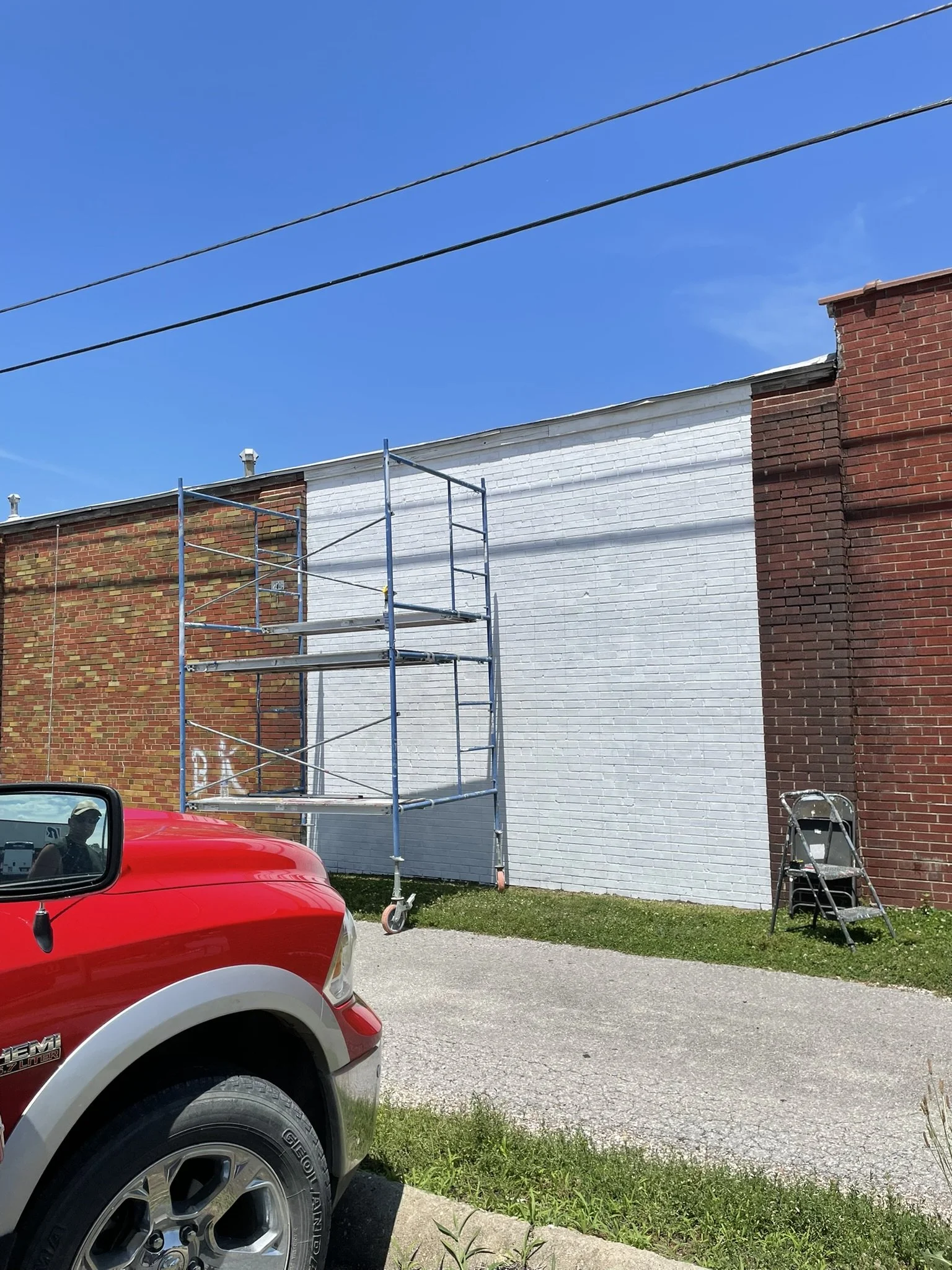
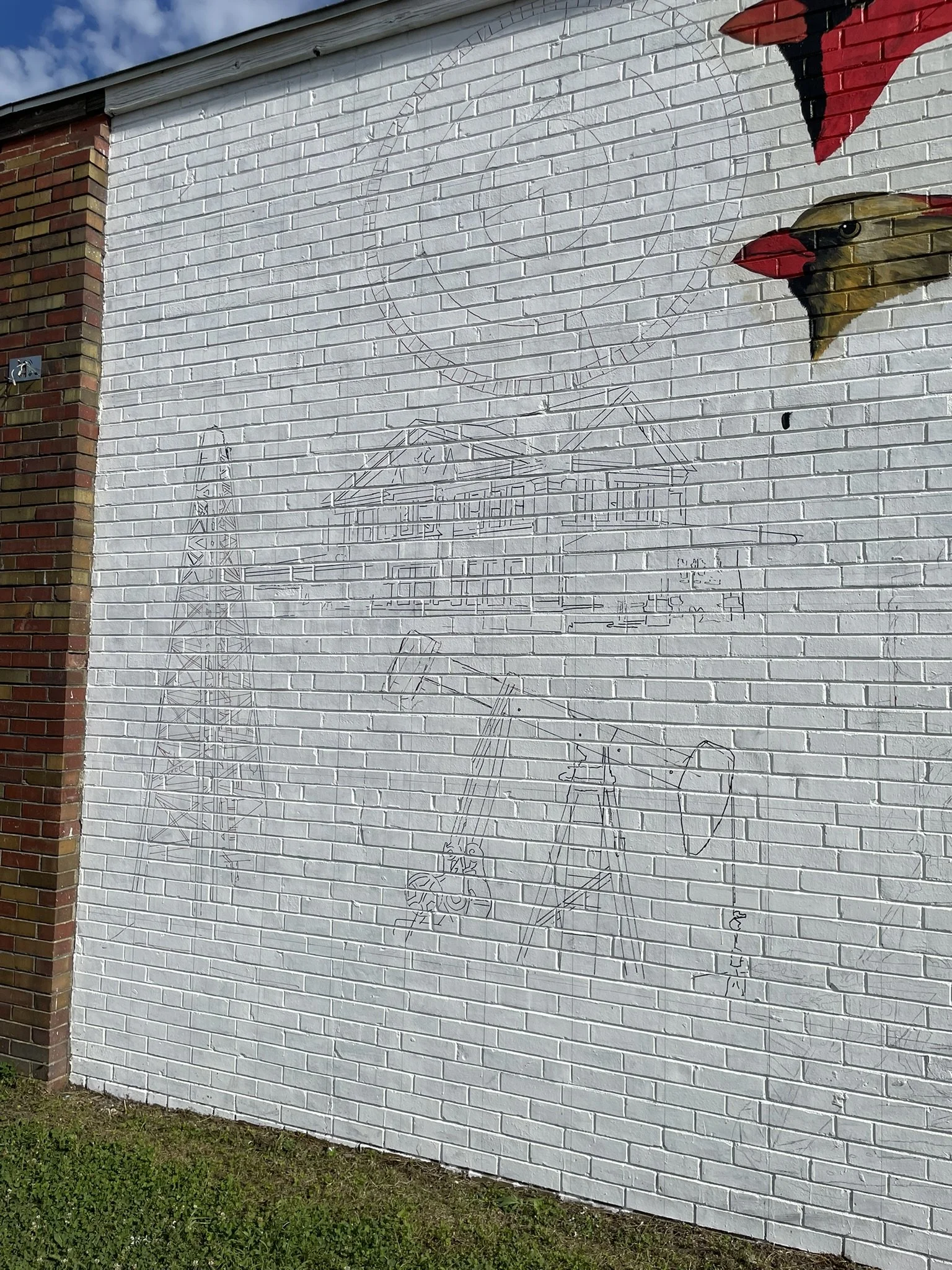
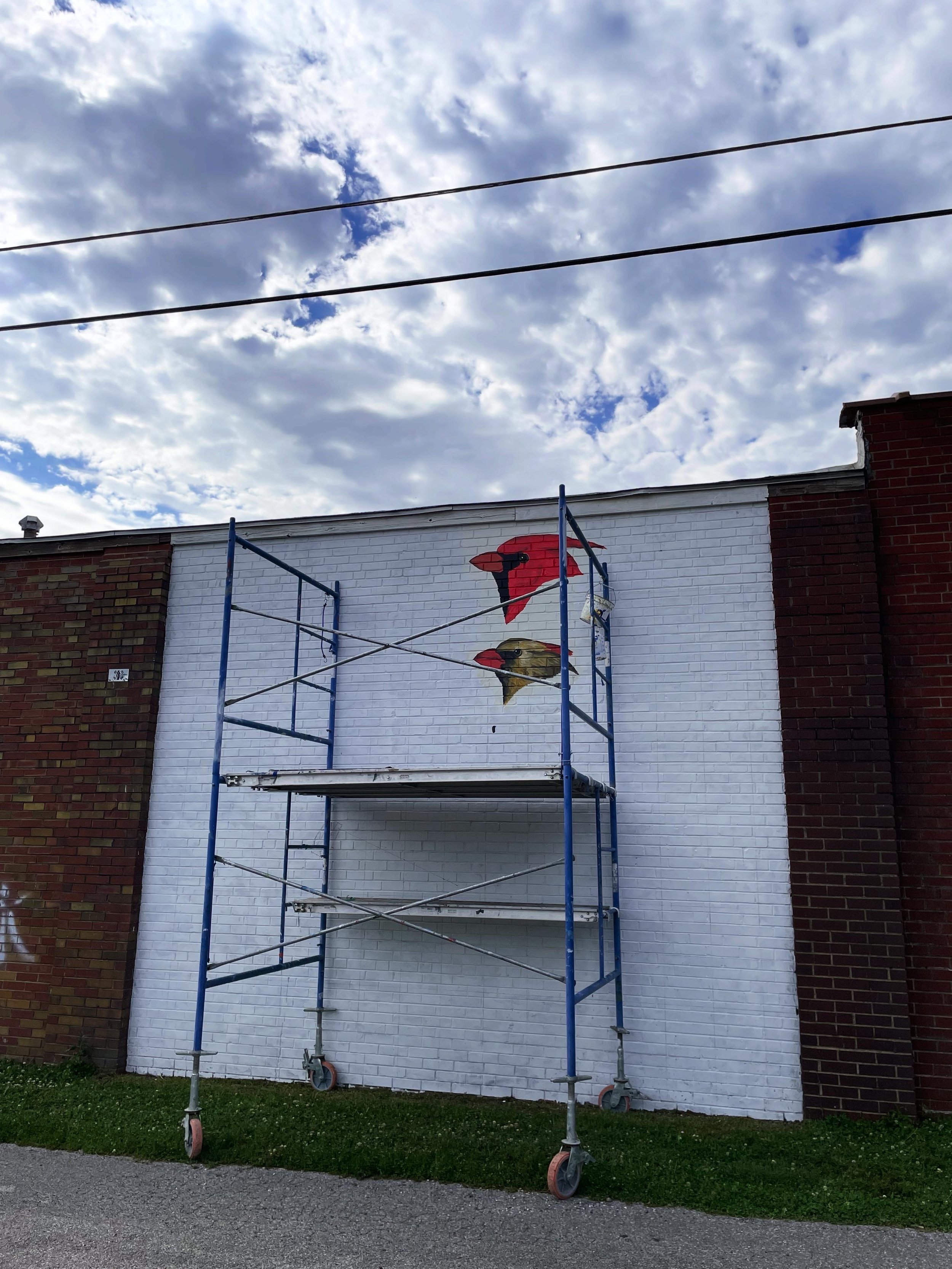
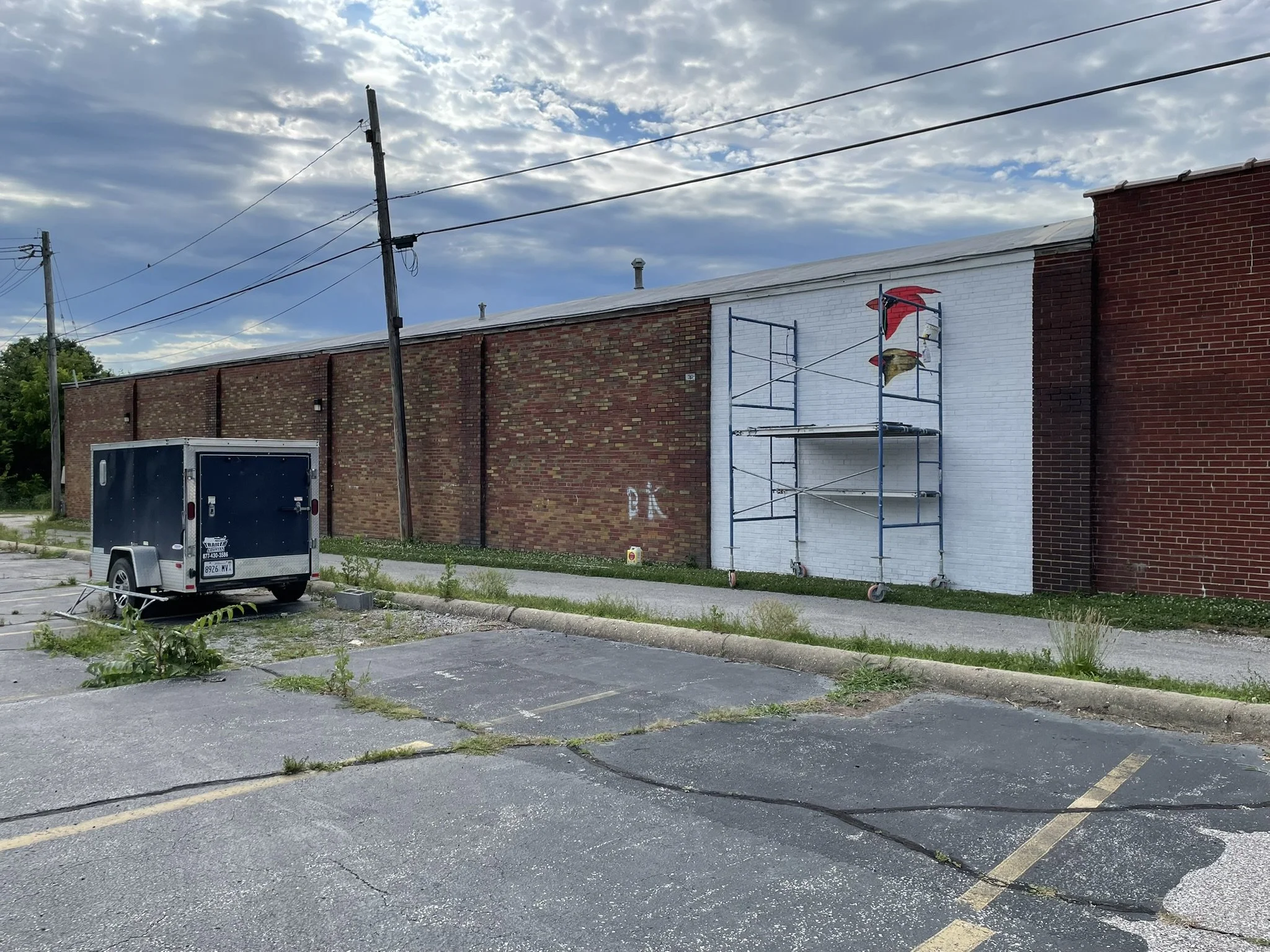
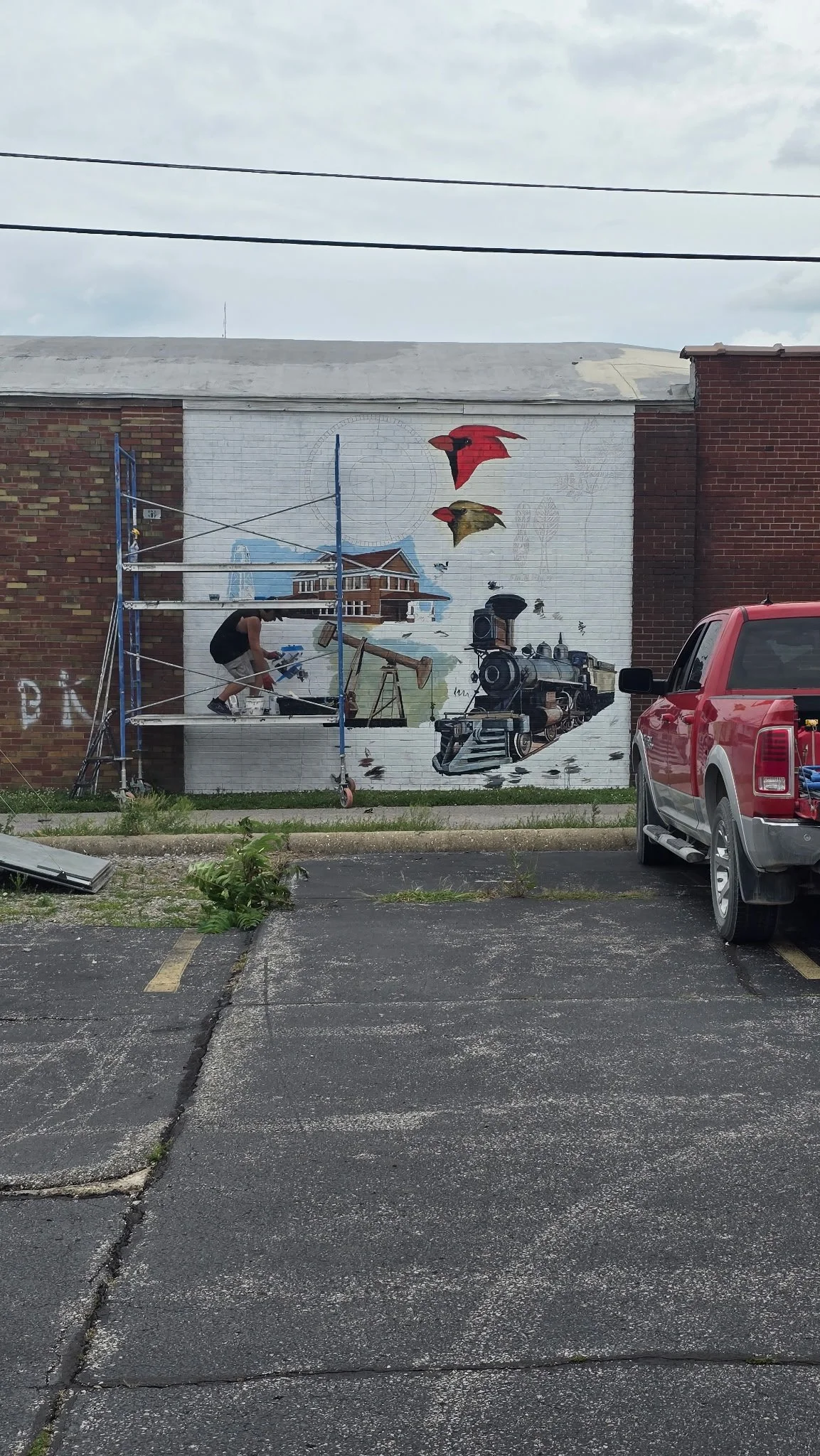
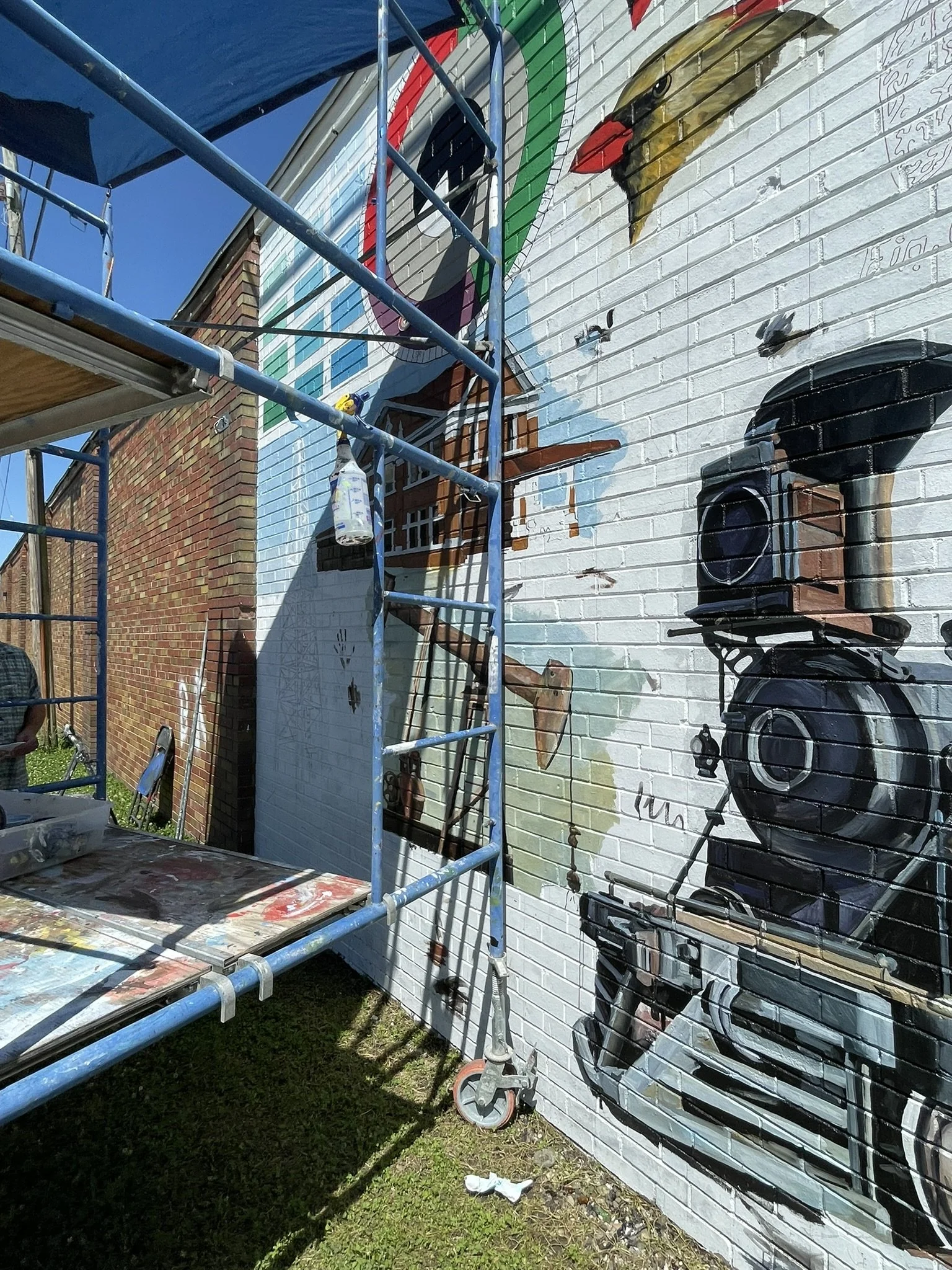
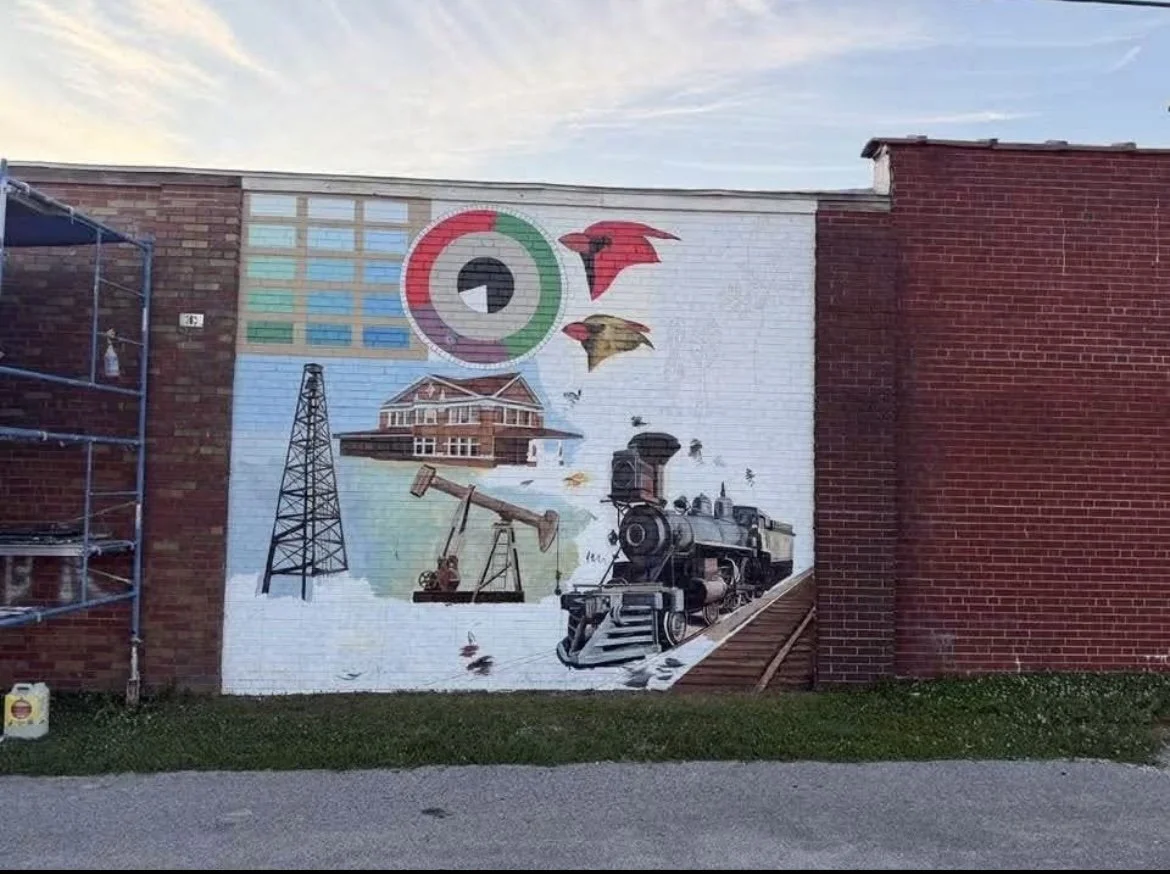
Market Street MTC is thrilled to announce the completion of a second large mural along main street featuring notable accomplishments and figures in early Mount Carmel history. This 15ft x 16ft mural is painted on the side of the “Mid-East” building at 820 Market Street. Since the 1940s, this building has housed a number of different businesses including the garage for the Mount Carmel Coca-Cola bottling company, an Army recruitment center, a Goodwill store, and several different hardware stores, most notably the Mid-East Supply and Machine Company. We want to thank Doug Walker and Constance Folsom, the current owner and operator of this building, for collaborating with us on this big project! We hope that this panel, representing the late 1800s through 1910s, will be the first in a timeline of historical murals along the building’s south wall.
Thank you to everyone who donated to Murals + Art to make this work possible, in particular the custodians of the Bolden Trust. And to the artist, Bob Treece of Olney, IL, who took our team’s ideas, research, and sketches and realized this gorgeous mural design, we are so grateful to have been able to work with you!
When you see the mural in person, you’ll notice each part of the design is captioned with a brief explanatory note, but if you’d like to know details about everything we’ve included, keep reading below!
THE IMAGERY
This mural documents significant Mount Carmel accomplishments from the late 1800s through the 1910s in the industrial and scientific arenas.
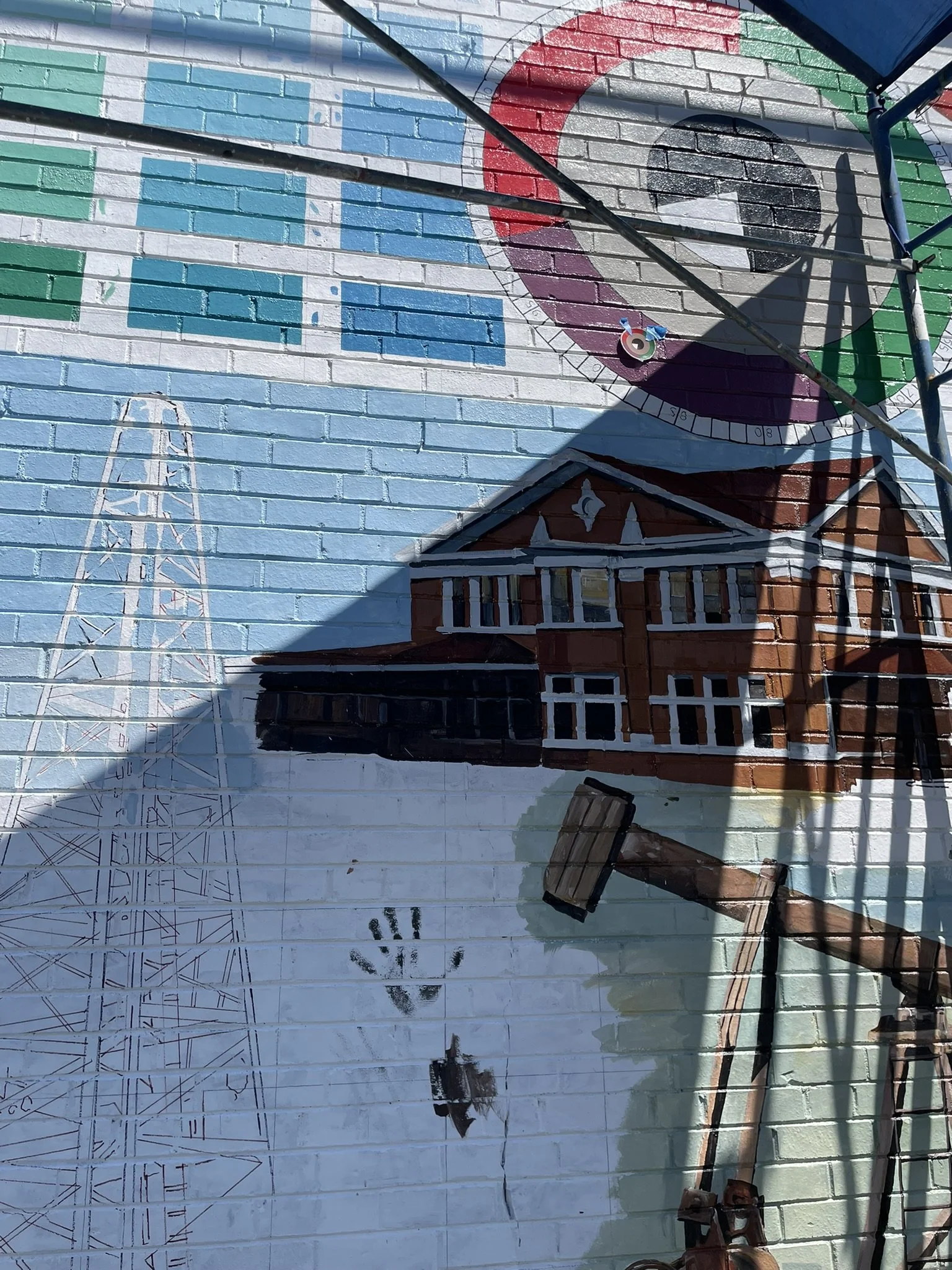
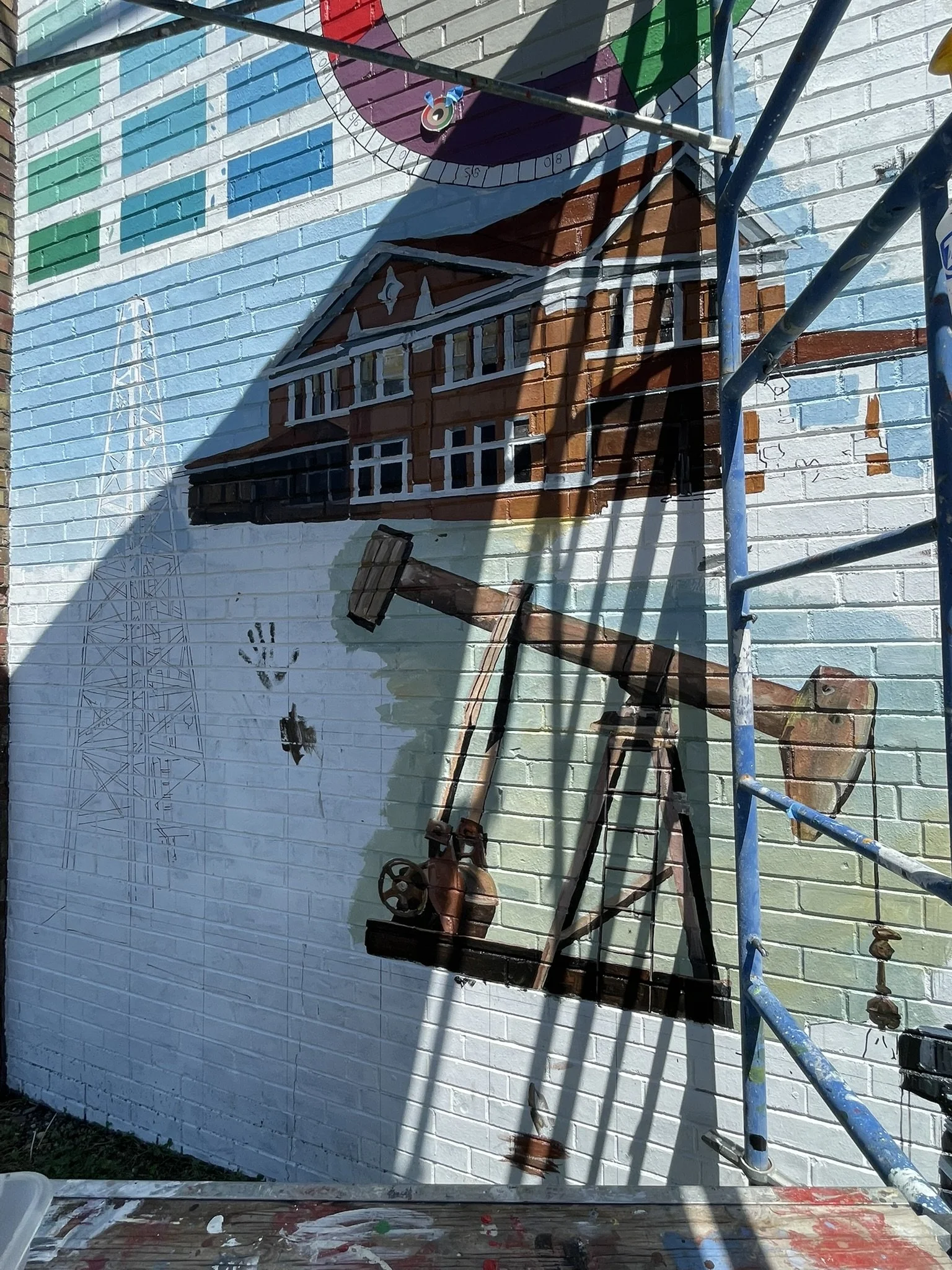
Oil derrick and drill:
The lower left part of the mural features the first oil well drilled in Wabash County. According to the Illinois Petroleum Resources Board, “the first producing oil well in Wabash County was drilled and completed in 1912 on the Adam Biehl farm two miles northwest of Allendale. The well produced 650 barrels per day. Wabash County has been a major oil producing county ever since, with more than 100 million barrels of production...”
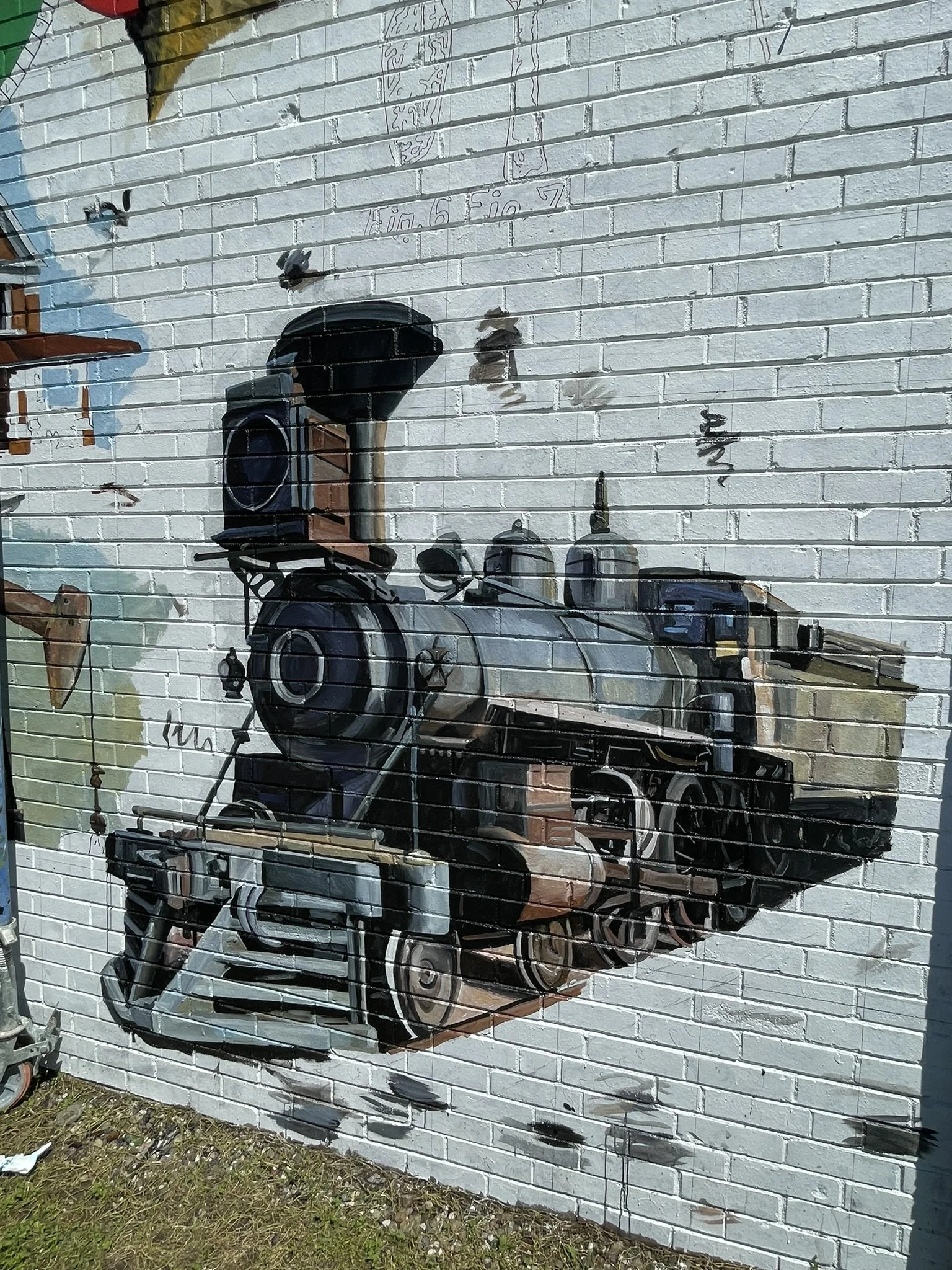
The Depot, bridge, and train:
Another 19th Century change that propelled Mount Carmel into the future was establishment of railroads throughout this region. According to the Wabash County History Museum’s excellent railroad exhibit, “the Big Four Railroad headquarters moved to Mount Carmel in 1884,” establishing Mount Carmel as “an important railroad hub” during that era. The first railway bridge across the Wabash River was built in 1884, and the Big Four Railway Depot building was built in 1905 (which still stands between 9th and 10th on Market Street). The train featured prominently in the mural is the Cairo & Vincennes Railroad Line, circa 1872.
This area of the mural also includes an unlabeled reference to the great flood of 1913. According to the Midwestern Regional Climate Center at Purdue University, “the March 1913 flood is the largest known volume flow for the Wabash River at Mt. Carmel…The Wabash River broke all levees in the local area…and was 8 miles wide.”
Cardinals:
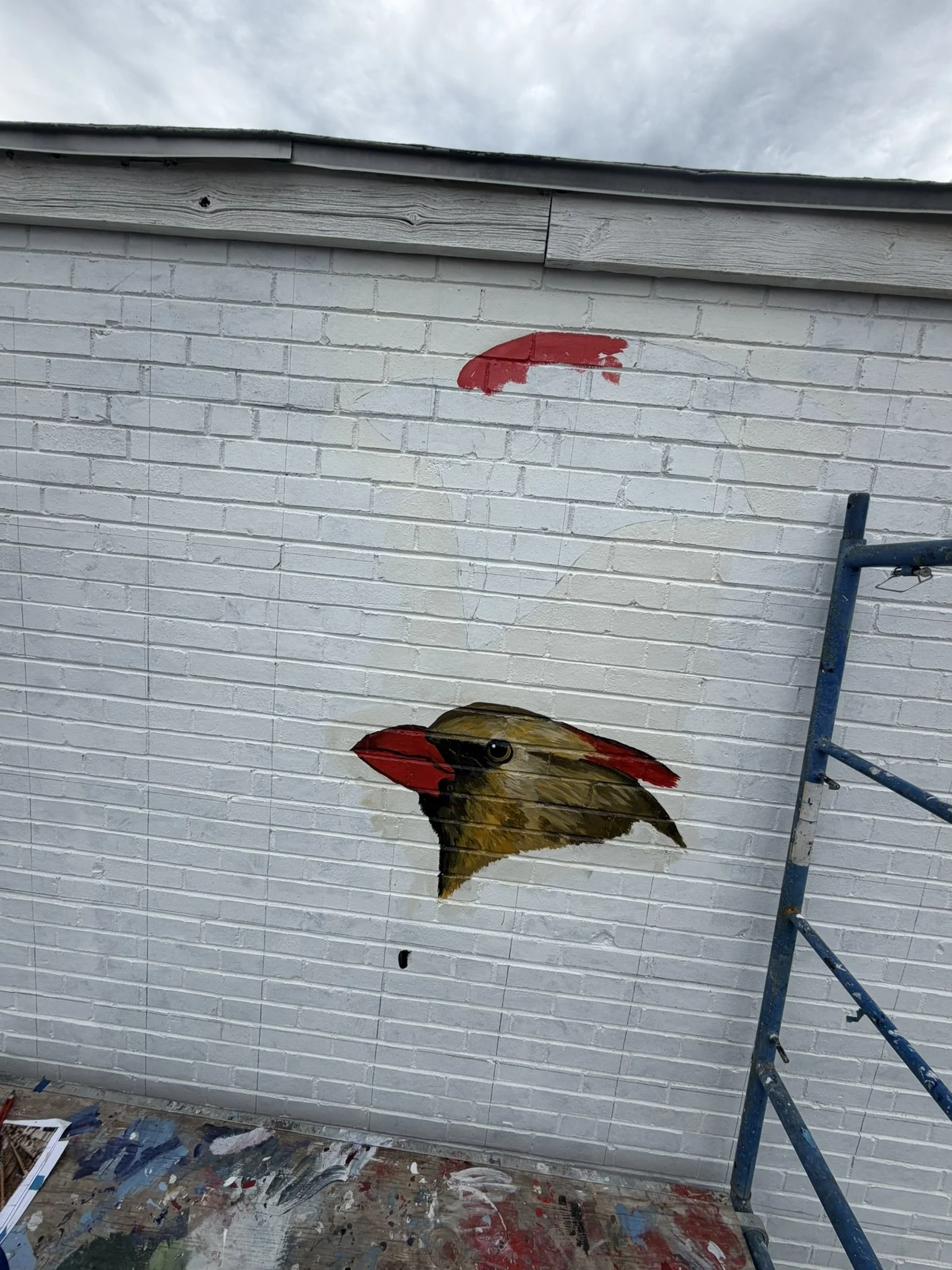
These illustrations are studies of the Northern Cardinal, Illinois’s state bird, made by ornithologist Robert Ridgway, who was born in Mount Carmel in 1850. Ridgway was recognized early in his life as a great observer of nature and a talented natural science illustrator. His pursuit of ornithology led to his appointment in 1886 as Curator of Birds for the Smithsonian. He was the founder of the American Ornithologists’ Union and author of the eight-volume reference book set The Birds of North and Middle America (1901-1919).
Color chart and optical spinner:
Robert Ridgway’s interest in ornithological taxonomy led to extensive observations of color in the natural world and his completion of the book Color Standards and Color Nomenclature in 1912. This book containing 1,115 named colors was Ridgway’s attempt at creating a standardized identification system for naturalists and other professionals. His colors were all observed in nature, specifically in the diverse feathers of birds. The mural includes a page of color swatches from Ridgway’s book, as well as an image of a Maxwell optical color-mixing disk, which appears on the title page of his book. This device, created by color theorist James Clerk Maxwell in 1855, demonstrates how all natural colors can be produced from three primary colors, red, green and blue. This is the foundation of modern RGB technology used in phone, television, and computer screens as well as some digital printers. (You might notice that the blue in the mural looks more violet. This is because of how the color appears in copies of Ridgway’s book.)
Botanical sketches:
Another notable figure with a deep interest in the natural world at this time in Mount Carmel’s history was physician and botanist Jacob Schneck. Born near New Harmony, IN, Schneck came to Mount Carmel in the late 1800s to open his medical practice and resided here, on 3rd Street, for the rest of his life. In addition to his work in the medical profession, Schneck was a dedicated botanist with numerous publications in journals and books about his botanical discoveries in the region. The mural features a rendering of a botanical specimen (Botrychium virginianum - Rattlesnake Fern), from the archives of the Field Museum in Chicago that Schneck collected and preserved here in Wabash Co around 1877.
In the top right corner of the mural, we have a rendering of Acer saccharum var. schneckii, also known as the Schneck Sugar Maple, named for him in 1913. It’s not the only tree in this region that now bears his name; the "Schneck oak" (Quercus shumardii var. schneckii) is a variety of Shumard oak native to the Midwest.